Our Story
The Story of the Grant Street Ladies & Grant Street Community
Grant Street is a small but mighty neighborhood in the heart of historic Hayti in Durham, North Carolina. It is the last remaining block that survived the devastation of urban renewal. For generations, families have held on to this land—through displacement, disinvestment, and change. Because mothers, grandmothers, and great-grandparents chose to stay, Grant Street still stands today.
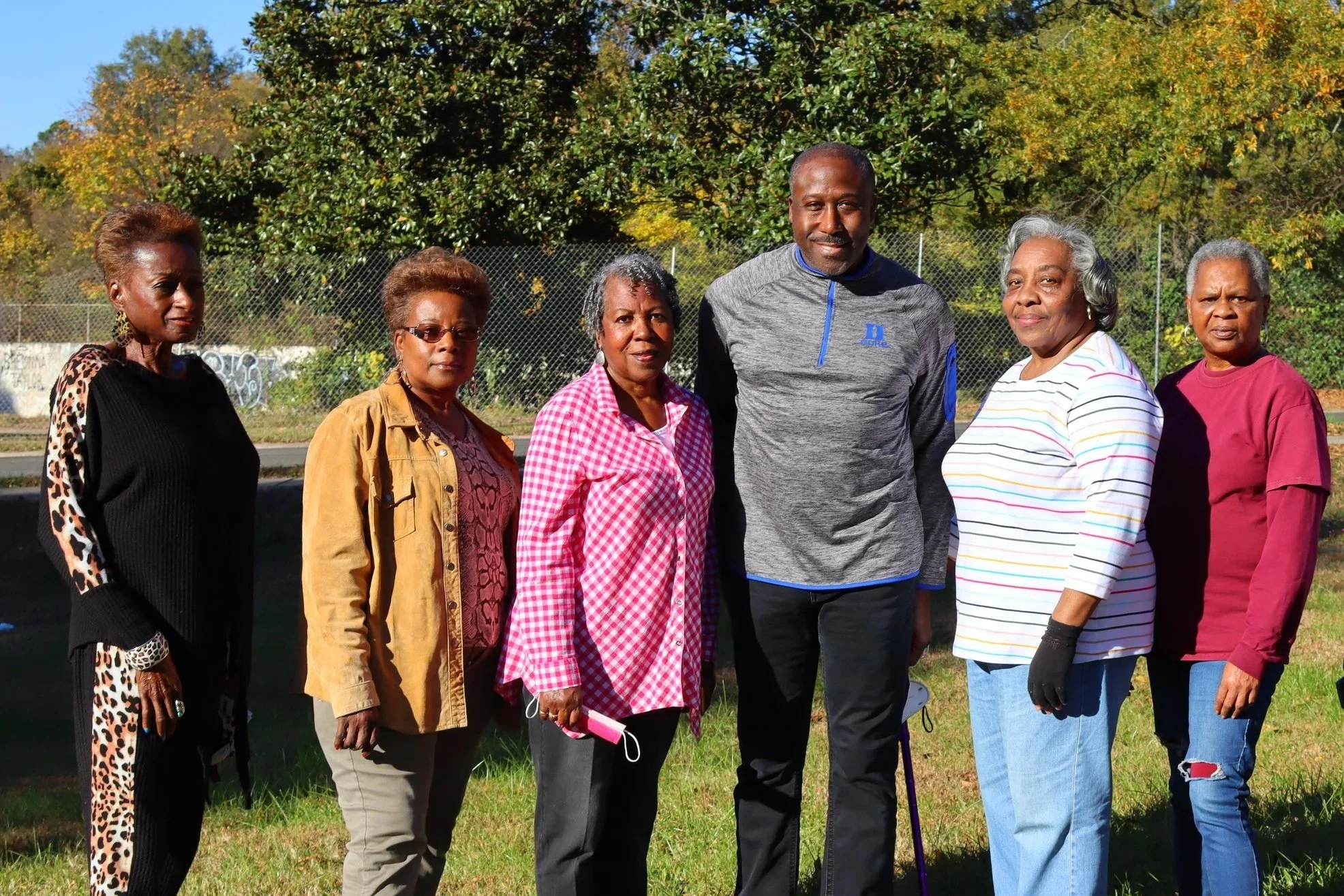
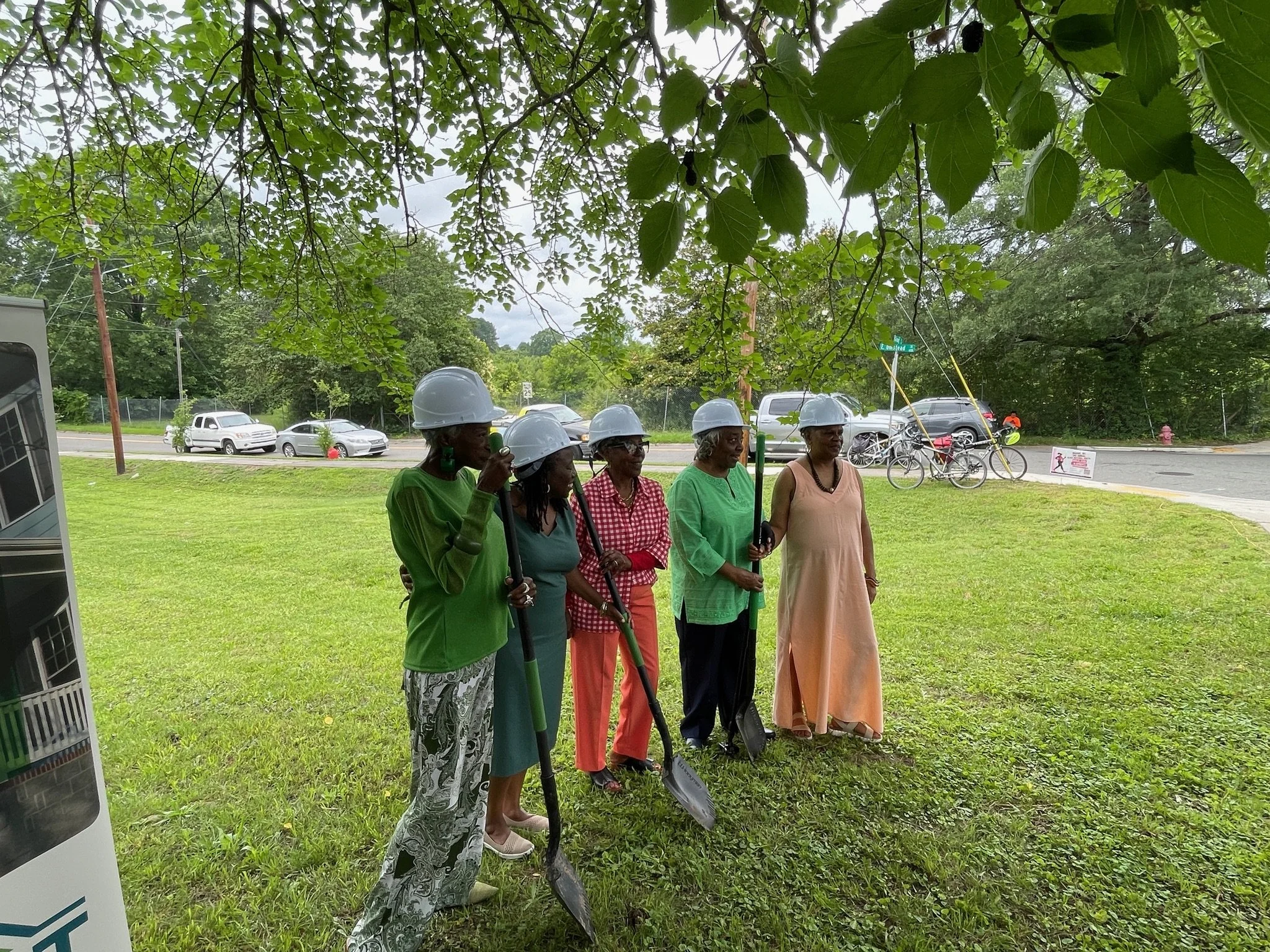
The Grant Street Ladies—Brenda Bradsher, Vivian Gunn, Pam Blake, Dianne Merritt, and Joanne Brown—are descendants of that legacy. They are neighbors, elders, and caretakers of a place that has shaped their lives for more than a century. They carry the stories of those who came before them, and they continue the work of tending to this community with deep care, wisdom, and commitment. Grant Street Community is not something new—it has always existed. What exists today is a renewed effort to name it, organize it, and ensure its future for generations to come.
A History of Advocacy and Action
Over the years, the Grant Street Ladies have led efforts to care for and strengthen the neighborhood. They organized with local leaders and partners, advocating for the restoration of the 20-year-neglected Fayette Place site so that affordable housing could return to the heart of their community. They often credit Bishop Clarence Laney, Jr. of Monument of Faith Church for taking a genuine interest in them as neighbors—listening closely to their concerns and standing with them in their advocacy. It was Bishop Laney who brought their voices before the city and helped move things forward in partnership with Durham CAN—then led by Atinuke (Tinu) Diver—building on early support from Shanetta Burris, who helped connect them to Durham CAN and encouraged them to hold on to their homes, ultimately contributing to the transfer of Fayette Place, now known as the Villages of Hayti, into the hands of the Durham Housing Authority for affordable housing.
While this marked a significant step toward redevelopment, residents have continued to hold a range of perspectives about the Durham Housing Authority, shaped by both hopes for affordable housing and concerns rooted in past experiences. Within this complexity, the leadership of the Grant Street Ladies has remained grounded in advocating for outcomes that reflect the dignity, stability, and long-term flourishing of their neighborhood.
Through persistent advocacy, the Grant Street Ladies helped secure the donation of three county-owned properties on Grant Street (702, 704, and 917). This effort led to a partnership with the Durham Community Land Trustees (DCLT) and created new opportunities for housing stability in the neighborhood. In addition, 714 Grant Street—the oldest home on the block, built in 1920 and represented in our logo—is currently in the process of being added to this collection. Much of the affordable housing visible today in the Grant Street community can be directly traced to the leadership, vision, and sustained efforts of the Grant Street Ladies.
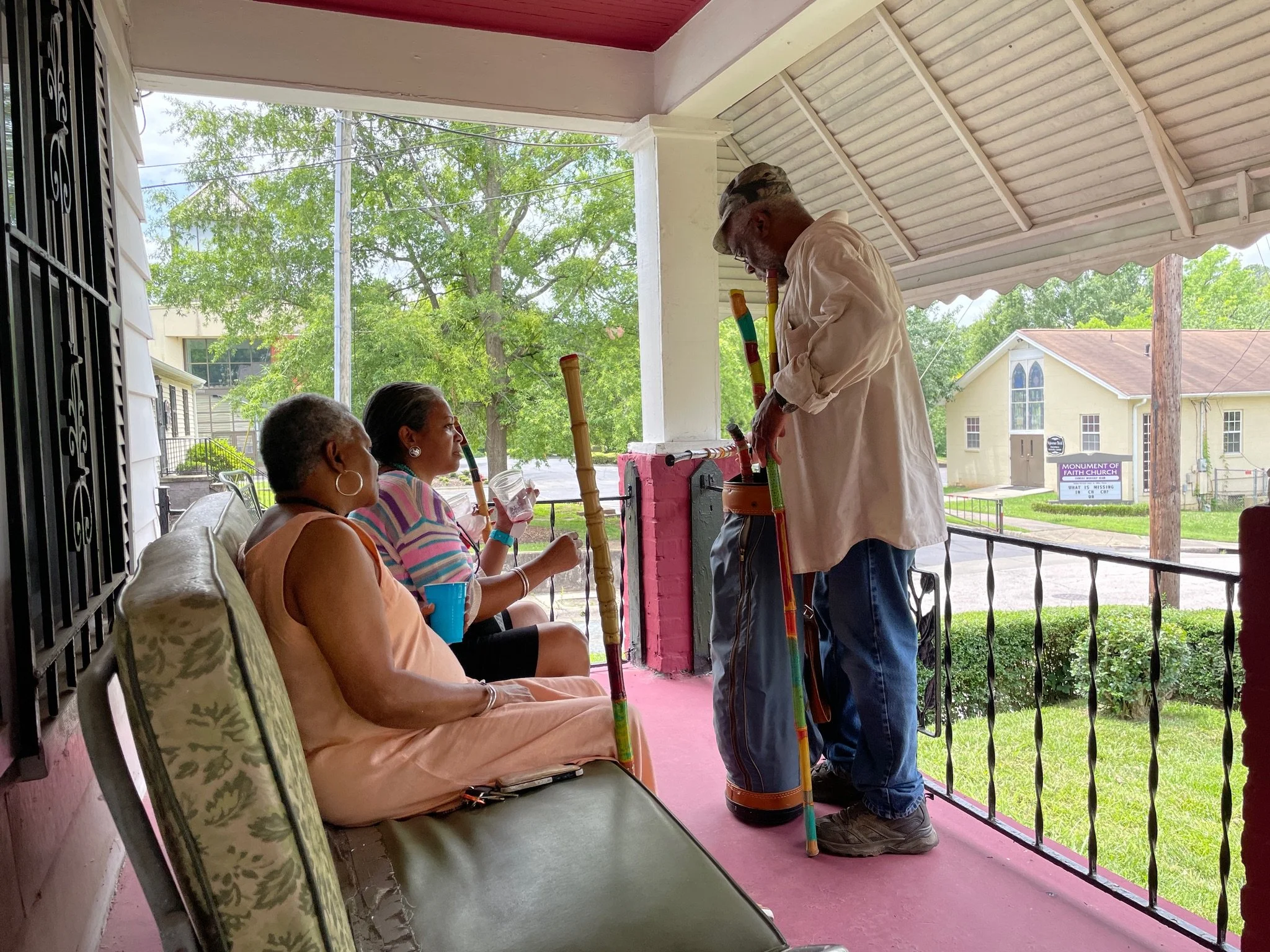
Their leadership has always been hands-on and deeply rooted in the life of the neighborhood. They have hosted meetings in backyards and on front porches, walked the streets with city officials, and spoken directly with leaders about the needs of their community. They helped advocate for improvements to Grant Street Park North, resulting in new playground equipment in where children now gather and play. They organized block parties, National Night Out events, and neighborhood initiatives like a Personal Hygiene Project to care for residents. They worked with the city to address safety concerns, reduce drug activity, and clean the Hayti Branch—efforts that ultimately led to significant city investment in restoring that part of the neighborhood. Their leadership and persistence directly led to significant city investment in restoring that part of the neighborhood—including $400,000 dedicated to the stream-enhancement portion of the project. The full contract, awarded to Moffat Pipe, totals approximately $11 million.
At the same time, the Grant Street Ladies have remained committed to preserving the history that lives within their block. In partnership with the City of Durham, they have helped uplift the stories of those who built this community—people like Ora Sneed Lee, a teacher; George Washington Harris, a formerly enslaved man; and Mr. Ore McCoy, a business owner. These stories are not just memories—they are the foundation of Grant Street’s identity and the reason this place matters.
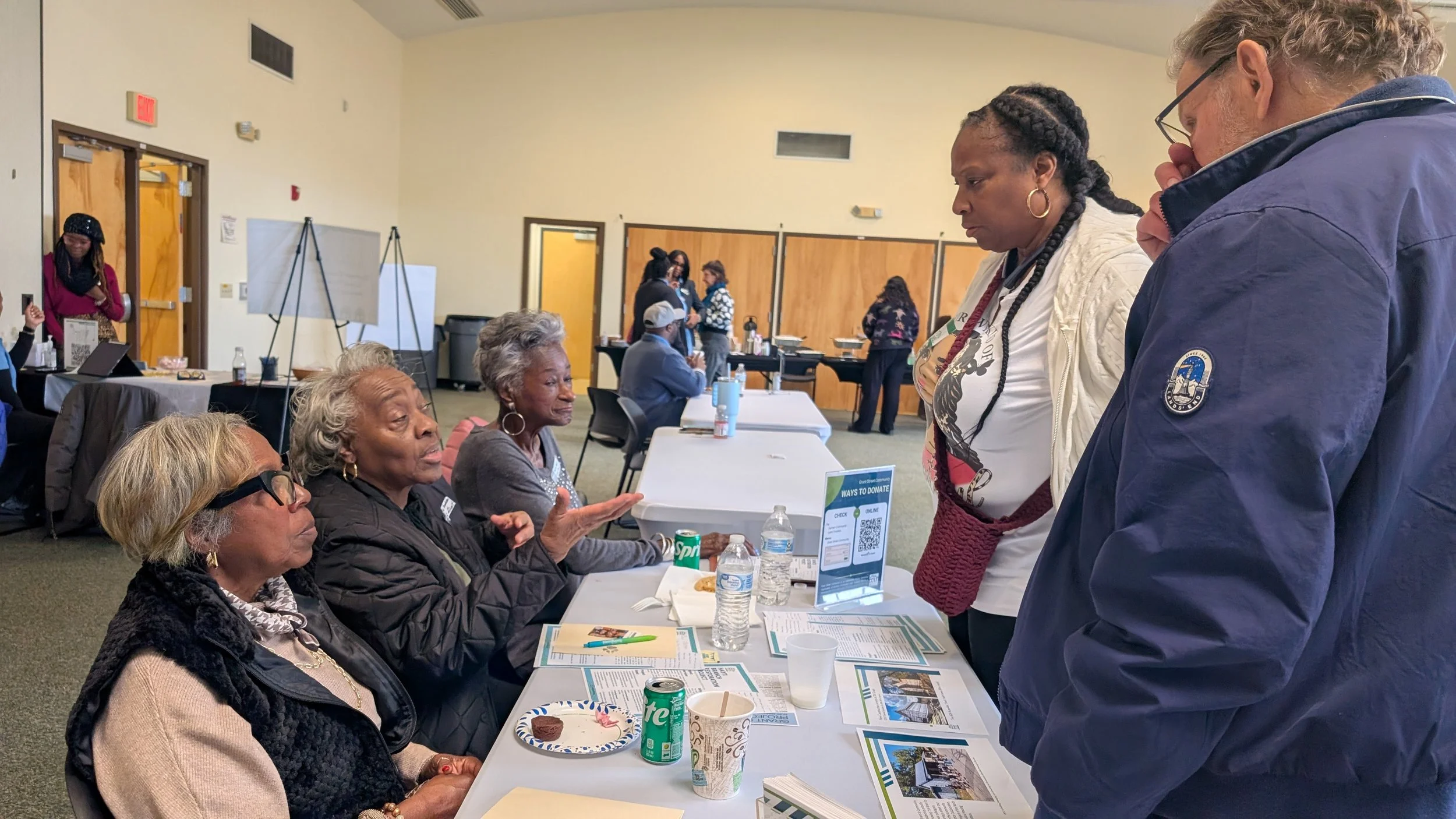
Today, the Grant Street Community is building on this legacy through a shared vision for the future. The Grant Street Ladies have been faithfully gathering on the fourth Saturday of every month since 2017—creating a consistent space for neighbors to come together, share updates, and shape the direction of the neighborhood. Over the years, this work has been strengthened by the leadership and steady presence of community members like Ajax Woolley and Regina Mays, whose contributions helped carry the vision forward and continue to guide it today.
A Shared Vision for the Future
As the work continues to grow, more neighbors and partners are being invited to step in and take part in shaping the future of Grant Street. In partnership with Monument of Faith Church and BLK South, neighbors have developed a 15-year strategic plan grounded in four commitments: building safety and connection, preserving history and storytelling, developing a sustainable funding model, and protecting housing and Black homeownership.
This next chapter includes revitalizing shared spaces like Grant Street Park, launching a community garden, gathering neighbors across generations, and ensuring that the stories and homes of this neighborhood remain in the hands of the people who have sustained it. It also includes building long-term systems of support—from community fundraising to future endowment efforts—so that the work of caring for Grant Street can continue for generations to come.
Grant Street Community is made up of neighbors—those who live on Grant Street and those who care deeply about its future. It includes anyone who is willing to join in the work of caring for this neighborhood, building relationships, and contributing to its long-term well-being.
Grant Street may be small in size, but it is rich in history, strength, and vision. The Grant Street Ladies remind us that community is something you fight for, something you nurture, and something you pass down.
This is their story.
This is Grant Street.
FAQ
-
We are still discerning that together as a community. Broadly, we describe the area as stretching from Pettigrew to Lawson and from Alston to Lincoln. We also think in terms of shared spaces—if Grant Street Park North or South is part of your everyday neighborhood, then you are part of Grant Street. While we recognize that boundaries can be helpful, we hold them with care, wanting to honor the history and relationships of this place without drawing lines that exclude.
-
We are still discerning this together as a community. If you feel connected to this neighborhood—whether through living here, growing up here, working here, or caring about its future—we welcome you to Grant Street Community. We are a relationship-centered community, and belonging is not only about place, but about shared commitment, presence, and care for one another.