Land & Neighborhood Stewardship
Within the Grant Street Community
Because of the leadership and organizing efforts of this community—especially the Grant Street Ladies, Bishop Clarence Laney, Jr., and partnered neighborhood advocates—Grant Street has already seen meaningful progress when it comes to land and housing.
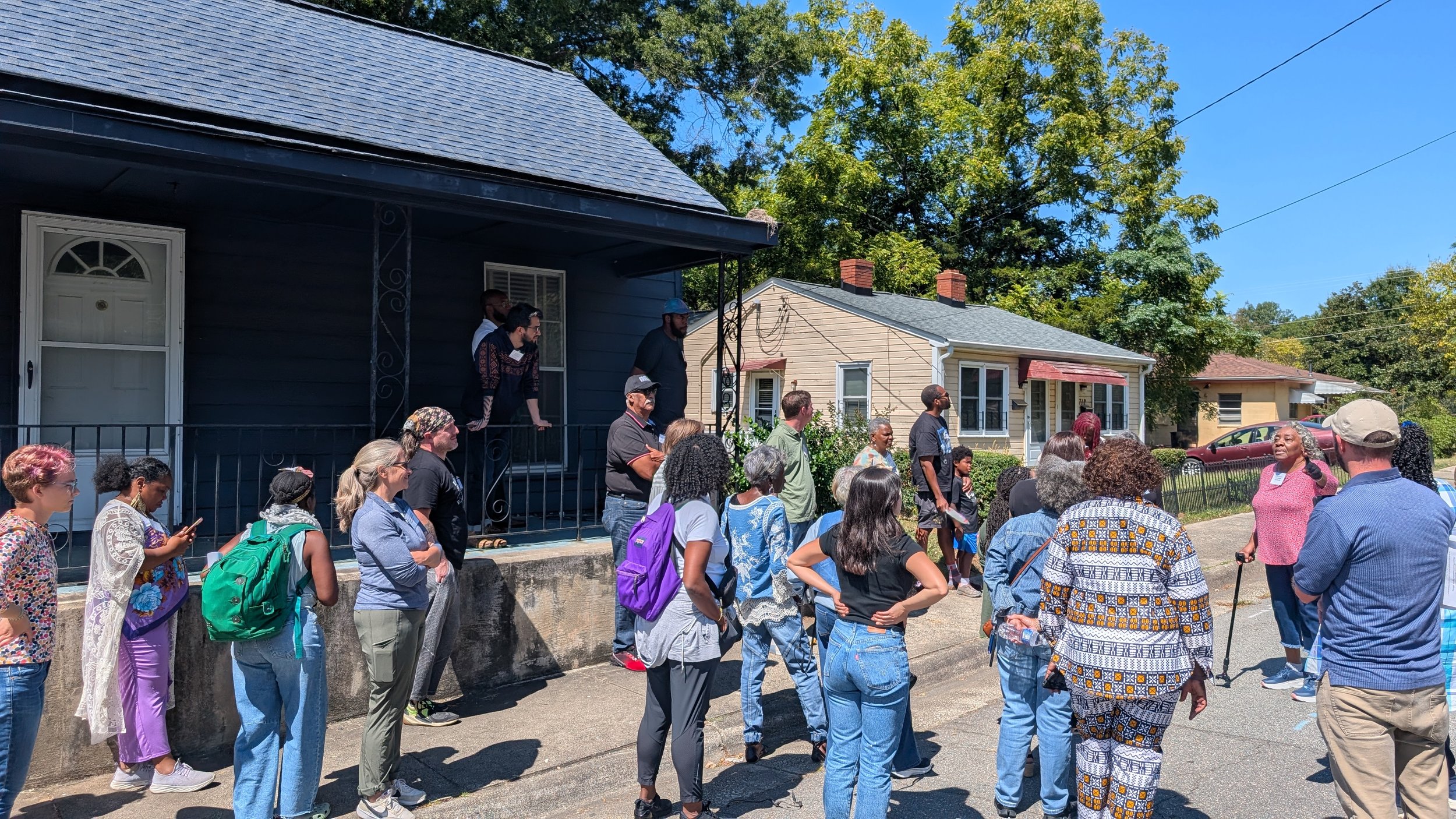
Through persistent work and partnership, the community played a direct role in securing and organizing around key properties, including 702, 704, and 917 Grant Street, as well as contributing to broader efforts connected to Fayette Place (now called the Villages of Hayti). These moments remind us that when neighbors come together with clarity and commitment, real change is possible.
At the same time, we recognize that there are still additional properties within our neighborhood that we would love to see acquired, cared for, and improved in ways that benefit the community.
Durham is home to several historically Black neighborhoods that carry deep cultural, spiritual, and communal significance—including Hayti (where Grant Street resides), Crest Street, Southside, West End (Lyon Park), Walltown, Merrick-Moore, Bragtown, and Old East Durham. These neighborhoods have long been places of resilience, creativity, and care, shaped by generations of Black families who built lives, institutions, and community in the face of systemic challenges.
As development pressures continue to rise, we are in ongoing conversation with leaders across several of these neighborhoods to explore how land, homes, and stories can be cared for and sustained over time.
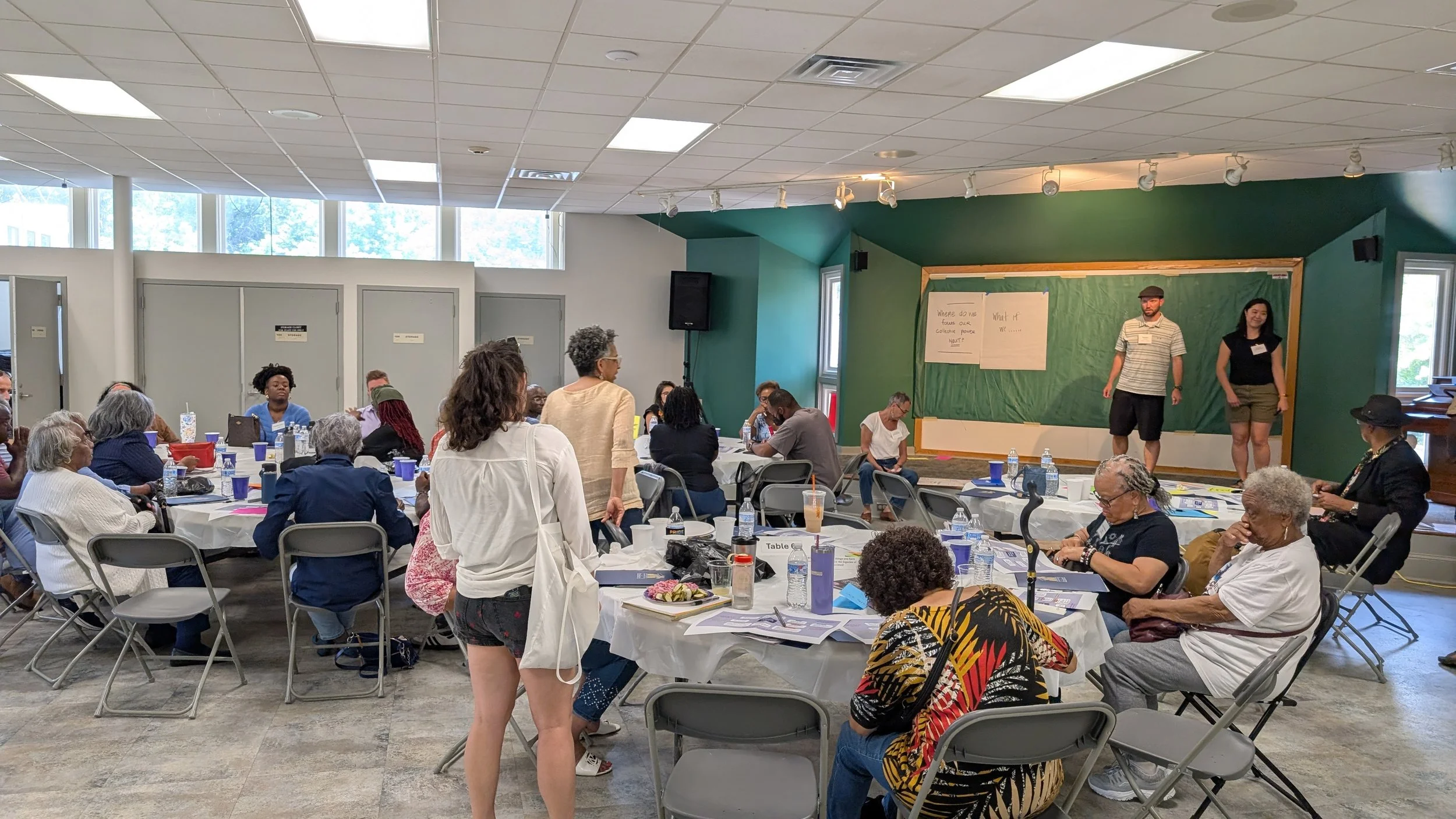
From time to time, we gather with neighborhood leaders and trusted partners to share learning, build relationships, and think together about what long-term neighborhood stability could look like within each unique context. These conversations remain open and evolving, recognizing that each neighborhood will move according to its own history, needs, and leadership.
Here on Grant Street, that looks like taking practical steps to better understand property ownership, identify opportunities for preservation, and explore pathways that support long-term community benefit. This includes learning from existing models, connecting with aligned partners, and creating space for future collaboration where there is shared interest.
A key part of this work is our hope to acquire and steward additional properties within our own neighborhood—holding them in ways that prioritize community use, long-term stability, and neighborhood benefit. Rather than properties being lost to outside speculation, we imagine spaces that can be used by neighbors—for housing, gathering, creative expression, and local economic activity—rooted in the life of the community itself.
Our hope is simple: that the people who have built and sustained these neighborhoods can continue to shape what they become.
Goal: $2.5M