Community Update: Building the Coalition Behind Hayti's Future Grocery Store
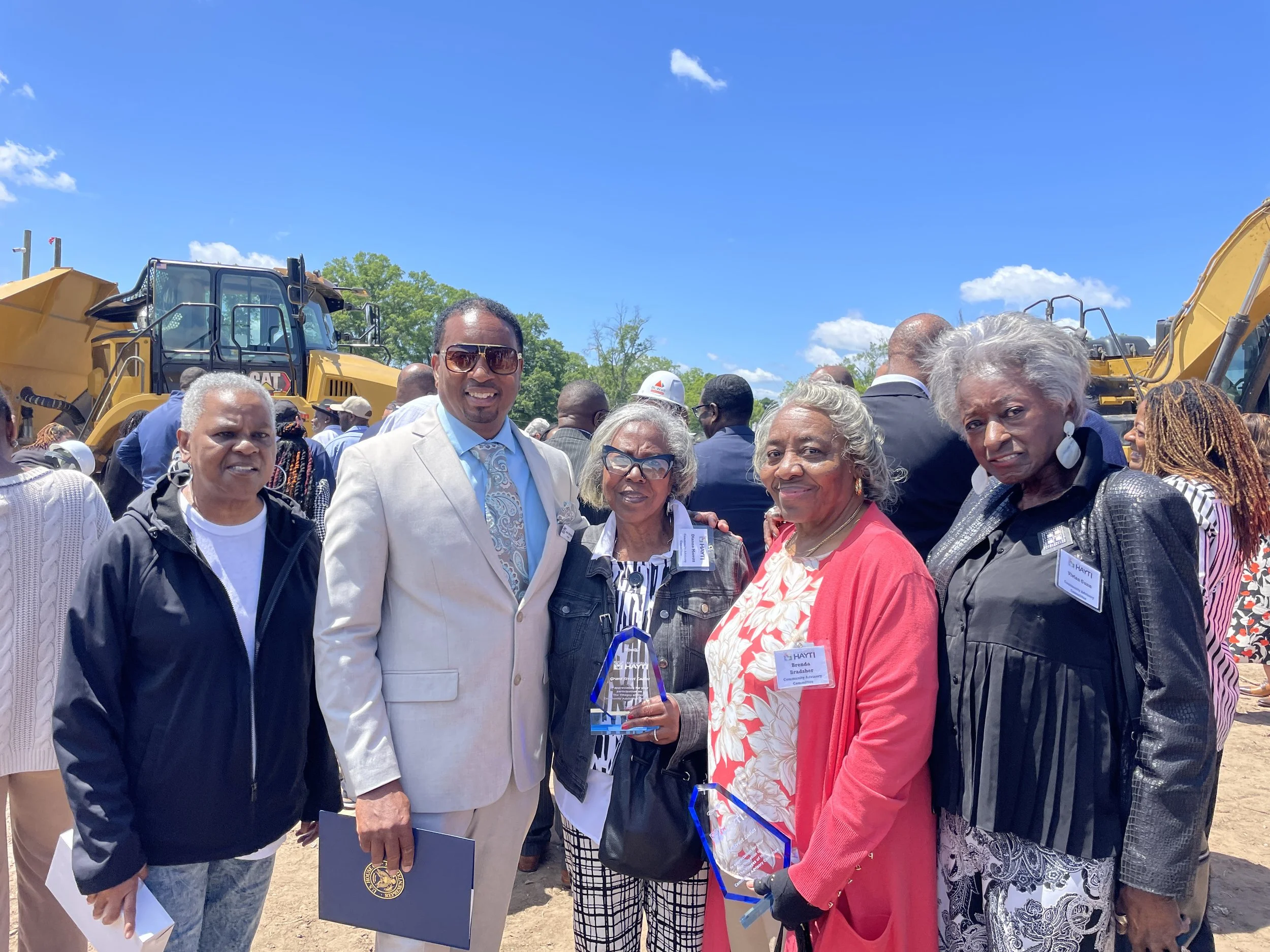
Villages of Hayti developer James Montague pictured with our neighborhood elders—the Grant Street Ladies: Pam Blake, Dianne Merritt, Brenda Bradsher, and Vivian Gunn.
One of the things we've committed to as the Grant Street Community is documenting the work that happens long before the ribbon cutting.
While many people will eventually see a neighborhood grocery store open in the Villages of Hayti, there are countless conversations, introductions, and partnerships taking place behind the scenes to help make that vision possible. Over the past few weeks, we've been intentionally connecting with people across Durham and beyond who care deeply about food justice, community health, economic development, and local agriculture.
On July 8th, we had a follow-up phone call with James Montague, the developer leading the grocery store project at the Villages of Hayti. We shared many of these ideas with him and talked about how this growing network of partners could help shape the grocery store into something much bigger than a retail space.
James also helped clarify the project's current financial picture. While we had previously been referring to a $6 million funding gap, he explained that because F7 Development is already constructing the building, the immediate need is now approximately $3 million in equity to outfit the interior for the future grocery operator. He also shared that while earlier conversations had taken place with El Mandado in Raleigh, the current discussions are with Oasis Fresh Market in Tulsa, which estimates needing approximately $3 million to complete the interior buildout.
For Kendall and me, that clarification only strengthened our resolve. While the immediate need is $3 million, we're setting our sights higher. Our goal is still to help identify $6 million in philanthropic, healthcare, foundation, corporate, and public funding—not only to help open the grocery store, but also to support the programming, partnerships, and community organizations that can help it flourish for generations.
The more people we meet, the more convinced we become that this project has the potential to become far more than a grocery store. It could become a neighborhood food hub where local farmers, healthcare organizations, researchers, community organizers, educators, and neighbors all work together to improve food access, strengthen Durham's local economy, and cultivate healthier, more connected communities.
Every meeting leads to another introduction. Every introduction sparks another idea. Every idea brings another partner to the table.
On Friday, July 3rd we had a conversation with Scott Brummel at Duke University. As we shared the vision for the grocery store and the broader community food ecosystem we're hoping to build, Scott recommended we connect with two additional organizations he believes could become valuable partners: Blue Cross and Blue Shield of North Carolina Foundation and the American Heart Association. We're looking forward to continuing those conversations and exploring how healthcare organizations can play a role in advancing food access and community wellness.
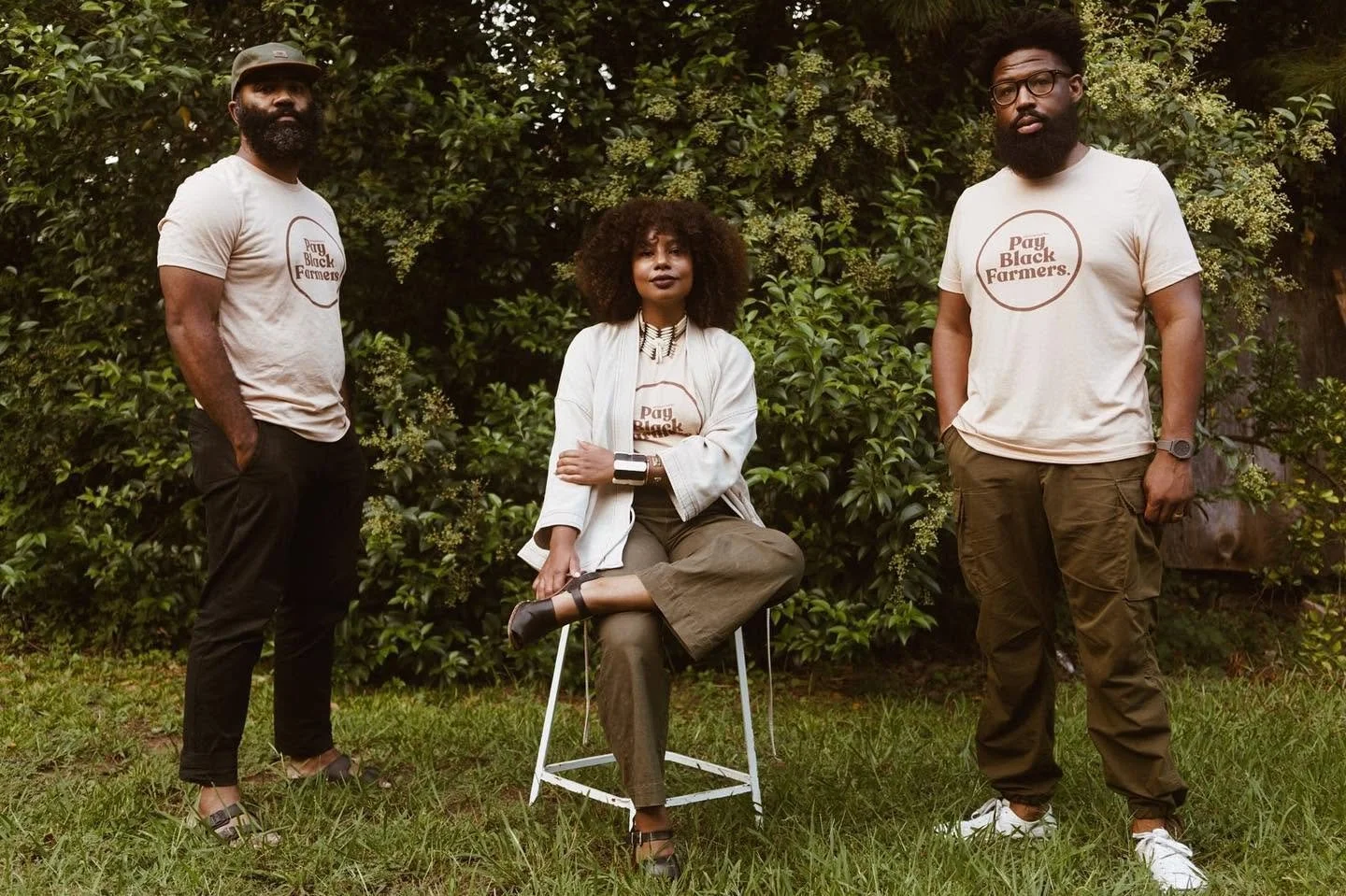
Tall Grass Food Box Co-Founders: Derrick Beasley, Gabrielle E.W. Carter, and Gerald C. Harris.
Yesterday, we had the opportunity to speak with Derrick Beasley, co-founder of Tall Grass Food Box. Derrick challenged us to think beyond the grocery store as simply a place to purchase food. Instead, he encouraged us to imagine it as a place that helps reconnect people with seasonal eating, local agriculture, and healthier relationships with food.
That conversation sparked several exciting possibilities. What if neighbors could sign up for Tall Grass Food Box subscriptions directly through the grocery store? What if the store became a place where people not only purchased food, but also learned how to cook with seasonal ingredients, preserve fresh produce, and better understand where their food comes from? Imagine learning not only when strawberries are in season, but also how to turn them into jam or preserve them for months to come. These kinds of rhythms help reconnect people with food in meaningful ways.
We've also continued conversations with JaNell Henry, founder of Black Farmers' Market, who shared that one of the most impactful things we could do for Black farmers is create wholesale opportunities. That idea has stayed with us. What if the produce department of the future grocery store could purchase directly from Black Farmers' Market while also creating dedicated shelf space for farmers connected through Tall Grass Food Box? Combined with accepting EBT and SNAP benefits, we believe this could strengthen Durham's local food economy while making fresh, healthy food more accessible for everyone.
These conversations also build on ongoing relationships with Dr. Lawrence David's research lab, Edible Atlas, at Duke University, where we're exploring how neighborhood-level wastewater research can help us better understand food access, nutrition, and community health, and with Ketty Thelemaque at Durham CAN, who continues to help us keep developers accountable and think about resident leadership and community organizing throughout this process.
This is what community organizing looks like, and we're grateful that so many people are choosing to invest their time, wisdom, and relationships into the future of Hayti.