Grocery Store Update: A Conversation with Blue Cross Foundation + The Heart Association
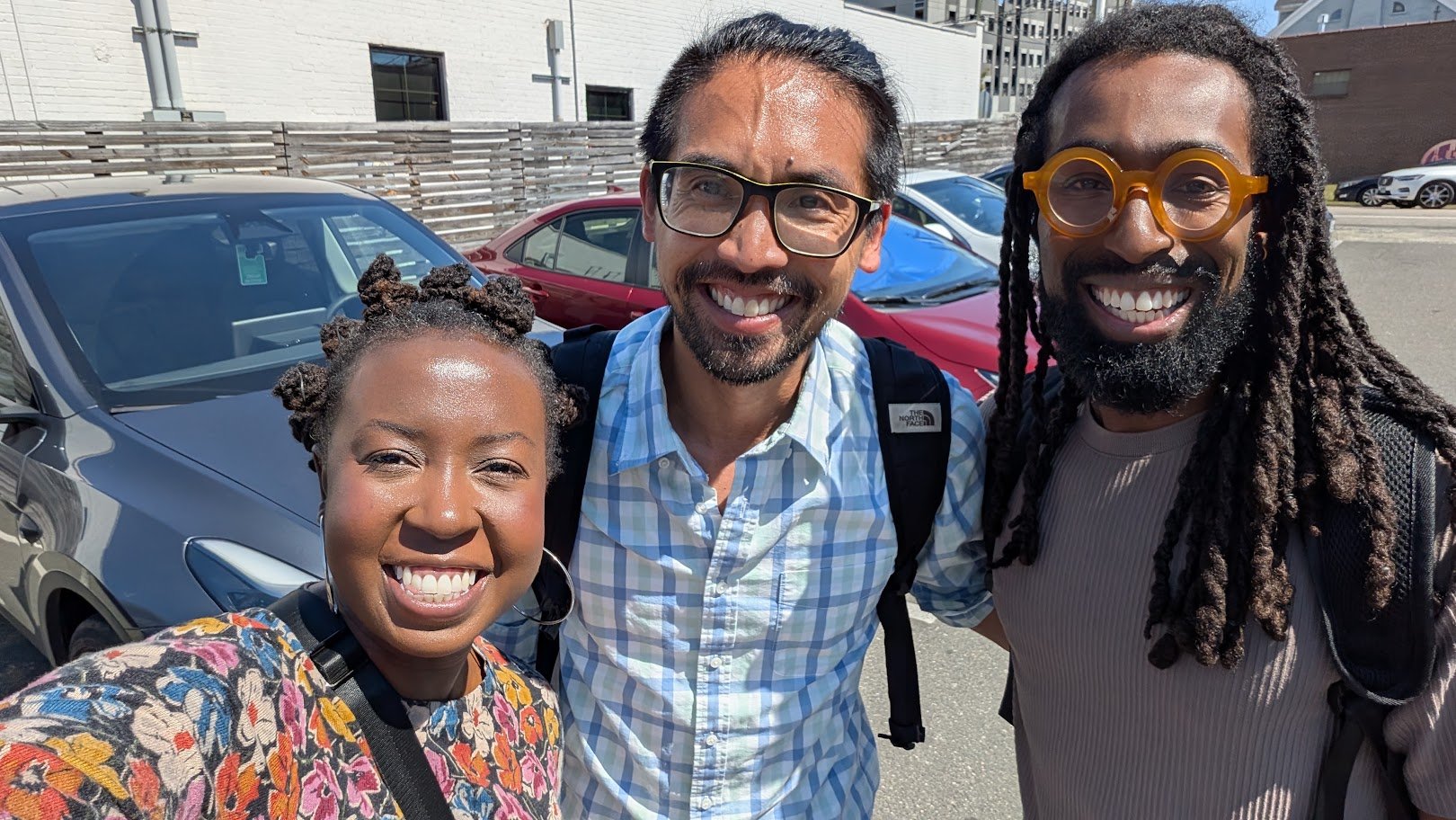
Grant Street residents Erin and Kendall Dooley with Duke researcher Dr. Lawrence David of Edible Atlas, following a meeting with the Blue Cross and Blue Shield of North Carolina Foundation and the American Heart Association about the grocery store project. Friday, September 11, 2026.
Grant Street Community and BLK South recently met with representatives from the Blue Cross and Blue Shield of North Carolina Foundation and the American Heart Association whose work focuses on food access, community health, and food-as-medicine initiatives. We are grateful to Scott Brummel with Duke University for connecting us and helping make this important conversation possible. Dr. Lawrence David of Duke University, a research partner helping us explore the connection between neighborhood conditions and health, also joined the conversation.
We shared our vision for bringing Oasis Fresh Market, a Black-owned grocery store based in Tulsa, Oklahoma, to the Villages of Hayti development. Approximately $3 million is still needed to complete and outfit the grocery store. We are also seeking an additional $3 million to build a larger neighborhood food ecosystem around it.
The neighborhood has been clear: we do not simply want another grocery store. We want a high-quality and affordable store that creates opportunities for Black farmers, improves neighborhood health, supports food education, and remains accountable to the people who live here.
What We Discussed
Much of our conversation centered on the idea of “food as medicine.” What we eat directly affects our health, yet many families lack nearby access to affordable, nutritious, and culturally relevant food. For Grant Street residents, especially elders and neighbors managing diabetes and other chronic illnesses, traveling to a quality grocery store can require additional time, transportation, and money.
We discussed how Oasis Fresh Market could serve as a community health intervention by connecting residents with healthy food before preventable illnesses become more serious. This could include nutrition education, cooking demonstrations, gardening, youth programming, food preservation, and opportunities to learn how food affects our bodies.
We also emphasized that healthy food must be culturally relevant. Improving health should not require people to abandon the foods, traditions, and agricultural knowledge that have sustained Black communities for generations.
Supporting Black Farmers and Local Economies
The proposed grocery store could create new and more consistent markets for Black farmers and food entrepreneurs. Our vision includes dedicated shelf space, produce displays, wholesale purchasing relationships, and partnerships with organizations such as the Black Farmers’ Market and Tall Grass Food Box.
This would allow the grocery store to circulate more resources through local farms, businesses, and neighborhood institutions—not simply extract money from the community.
During the meeting, we also learned about organizations across North Carolina developing similar community-centered food projects. These include Three Sisters Market in Charlotte, organizations serving Southeast Raleigh, and Community Food Strategies, which connects food councils and food-system leaders throughout the state.
These connections could help us learn from communities that are further along, avoid preventable mistakes, and strengthen our own model in Hayti.
Researching the Neighborhood Impact
Dr. David shared ideas for measuring how the grocery store and surrounding food programs affect neighborhood health over time. This could include studying changes in food access and selected community health indicators while protecting residents’ privacy.
We also discussed the importance of long-term commitment. Research must benefit the neighborhood, respect community knowledge, and remain accountable to residents. Hayti should not simply become a place where institutions collect information. Any research partnership must help the community understand what is changing and use that knowledge to improve residents’ lives.
Our Next Steps
Following the meeting, we will:
Share our grocery store project one-pager with the representatives so they can continue conversations with their teams.
Explore connections with other community-led grocery stores and food organizations across North Carolina.
Learn from previous grocery store projects, including why some struggled to earn lasting neighborhood support.
Continue developing partnerships with the Black Farmers’ Market, Tall Grass Food Box, Monument of Faith Church, Duke University, and other local institutions.
Explore foundation support, public investment, private partners, and community development financing to help close the $6 million funding gap.
Continue conversations about how research and evaluation can measure the store’s impact on food access and neighborhood health.
Keep Grant Street and Hayti residents involved as the vision, partnerships, and funding strategy develop.
This meeting did not produce an immediate funding commitment, but it opened important doors. The representatives expressed interest in sharing the project, connecting us with others doing related work, and continuing to explore what partnership could look like.
Our goal remains clear: raise $3 million to help open the grocery store and another $3 million to ensure the neighborhood flourishes alongside it.
We will continue keeping neighbors informed as the project moves forward.