Building Partnerships for a Community-Centered Neighborhood Grocery Store
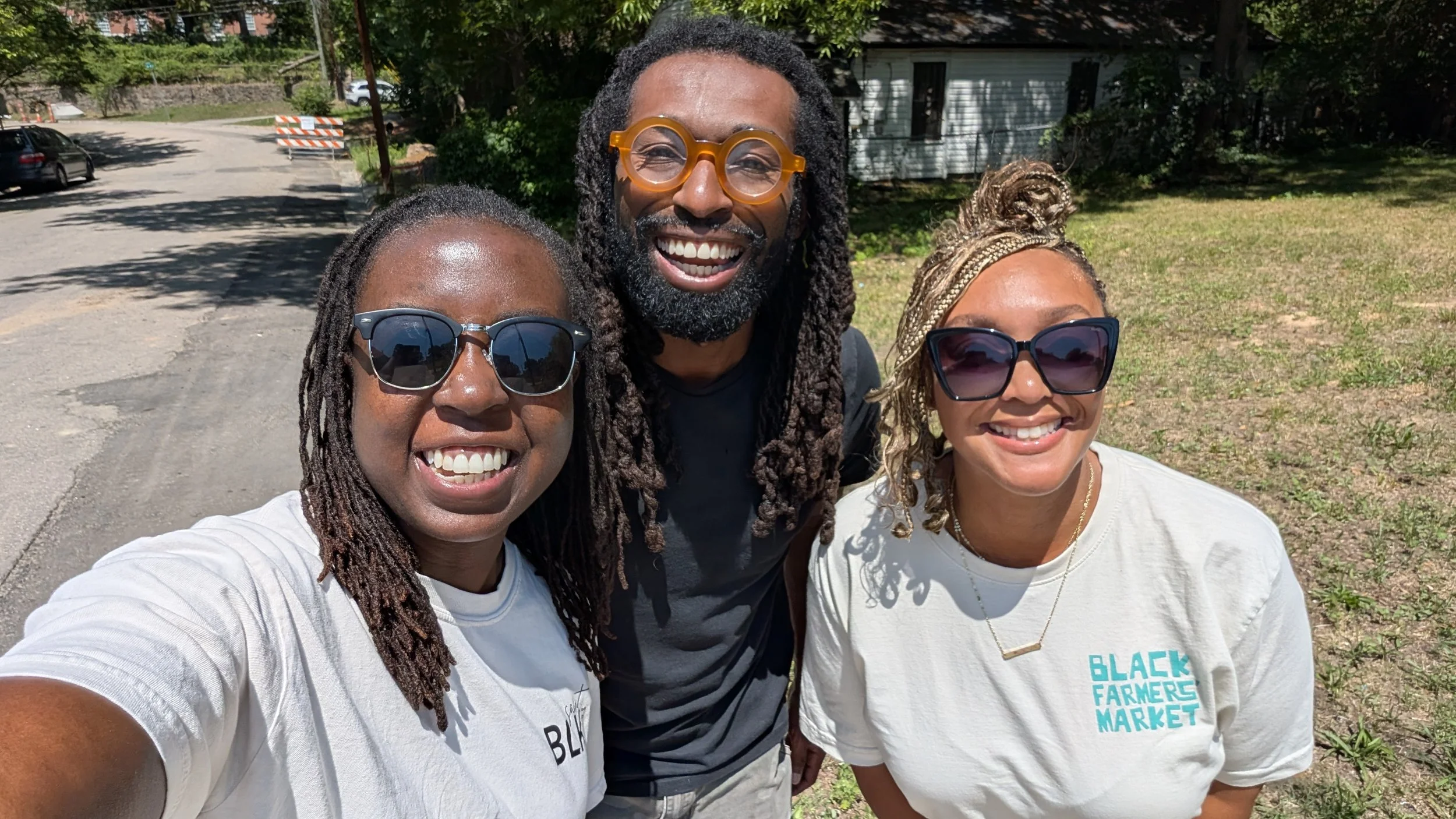
Grant Street Community resident leaders Erin and Kendall Dooley joined Black Farmers' Market founder JaNell Henry for a walking tour of the neighborhood to discuss opportunities for food access, community development, and future collaboration. - July 1, 2026
One of the commitments we made through the Grant Street Community's 15-Year Neighborhood Plan was simple: we would not try to build our future alone.
Instead, we would spend time listening, learning, and building relationships with organizations, researchers, community leaders, and institutions already doing important work across Durham. Every meeting is another opportunity to better understand the landscape, avoid reinventing the wheel, and identify how our neighborhood can work alongside others to create lasting change.
On June 9th, 2026, we had the opportunity to meet with JaNell Henry, Executive Director and co-founder of the Black Farmers' Market, to continue conversations around one of our neighborhood's long-term hopes: bringing an affordable, community-centered grocery store to the Villages of Hayti development.
Why a Grocery Store?
Many neighbors know that the 21-acre Villages of Hayti development is one of the largest investments currently taking place in our community.
What many people may not know is that plans have long included a grocery store along the Fayetteville Street side of the development. Unfortunately, despite years of work, there remains an estimated multi-million-dollar funding gap that has prevented that vision from becoming a reality.
Rather than accepting that reality, residents are asking a different question:
What partnerships, funding opportunities, and community leadership might help close that gap?
While Grant Street Community is not developing the grocery store ourselves, we believe neighbors can play an important role in convening the right people, sharing research, advocating for investment, and ensuring community voices remain at the center of the conversation.
Learning from Black Farmers' Market
JaNell shared the remarkable story of how Black Farmers' Market began—not because someone wanted to start another market, but because Black farmers themselves asked for a space where they could sell directly to Black communities.
Since launching, Black Farmers' Market has grown far beyond a monthly market. Today, they support Black farmers through wholesale opportunities, SNAP and EBT programs, educational workshops, business development, and connections that help farmers build sustainable livelihoods.
One insight especially stood out:
The long-term sustainability of Black farmers depends not only on farmers markets, but on larger, consistent wholesale opportunities.
That insight has important implications for our neighborhood.
A future grocery store isn't simply about having another place to buy food. It could also become part of a larger ecosystem that strengthens Black-owned farms, creates reliable markets for local producers, and expands access to healthy food for Durham residents.
Connecting the Right People
One of the exciting aspects of this project has been watching relationships begin to connect.
Over the past several months, we've been meeting with researchers studying food insecurity, community organizers, neighborhood leaders, developers, and now organizations deeply rooted in Black food systems.
Rather than working in isolation, we're trying to weave these conversations together.
Current and future partners include:
Black Farmers' Market
Tall Grass Food Box
Duke researchers studying food access and food insecurity
Durham CAN
The Villages of Hayti development team
Durham Housing Authority
Additional cooperative grocery leaders across North Carolina
Our hope is that each organization contributes what they do best while working toward a shared goal.
More Than a Grocery Store
One thing that became clear during our conversation is that this work is about much more than a building.
It's about creating systems that:
Improve access to affordable, healthy food.
Support Black farmers and local food entrepreneurs.
Accept SNAP and other food assistance programs.
Explore innovative community ownership models.
Build wealth within historically Black neighborhoods.
Keep community voices at the center of neighborhood development.
We also discussed opportunities to pursue larger grants together—not only to help close the grocery store funding gap, but to ensure that the community organizations doing this work have the resources needed to continue serving Durham for years to come.
Looking Ahead
This conversation represents one step in a much larger journey.
In the coming months, we'll continue meeting with additional partners, identifying funding opportunities, learning from successful food initiatives across North Carolina, and advocating alongside neighborhood residents for investments that strengthen Hayti.
The Grant Street Community has always believed that meaningful neighborhood development happens through relationships before it happens through construction.
Every meeting, every introduction, every shared idea, and every new partnership is another brick being laid toward a healthier, stronger, and more connected community.
We're grateful to JaNell Henry and the entire Black Farmers' Market team for generously sharing their wisdom and experience, and we look forward to exploring what collaboration might make possible for the future of Hayti.