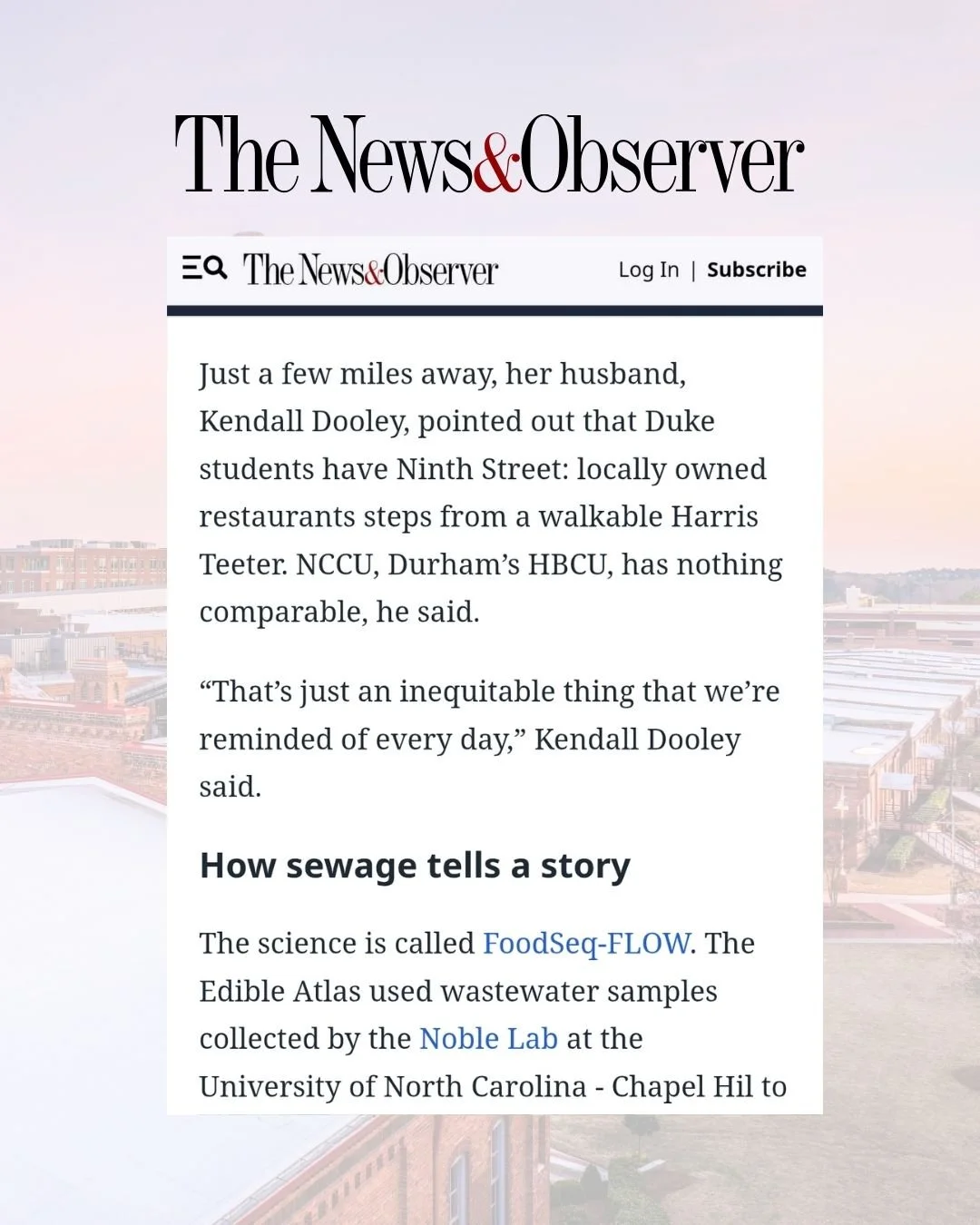
Featured in The News & Observer for Grocery Store Advocacy

The feature marks the second major news story highlighting Grant Street Community’s advocacy for equitable food access and a Black-owned grocery store in Durham’s historic Hayti District.
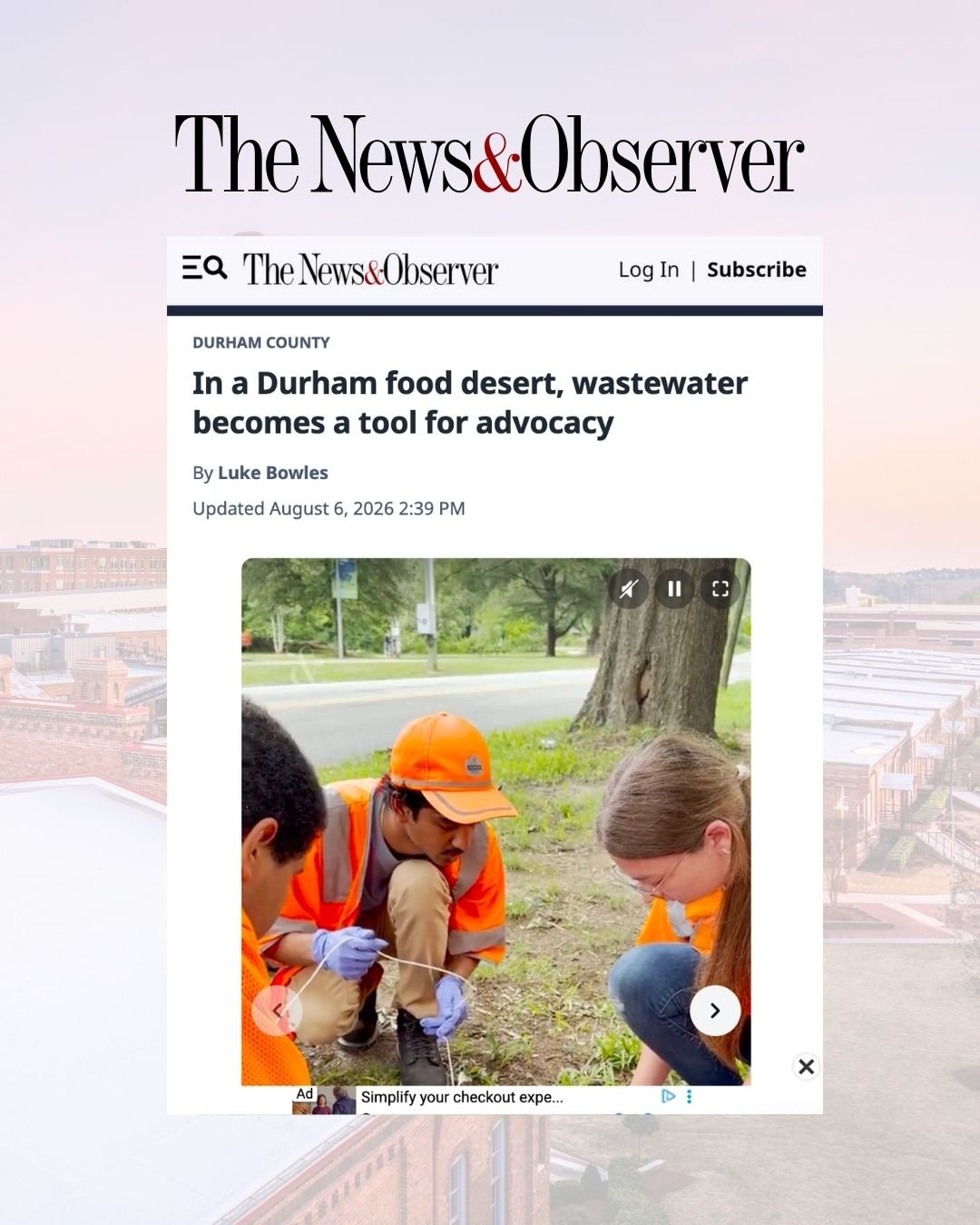
Grant Street Community’s ongoing advocacy for a grocery store in historic Hayti was recently featured in The News & Observer in an article by journalist Luke Bowles titled, “In a Durham food desert, wastewater becomes a tool for advocacy.”
The August 6 feature explores an emerging partnership between Grant Street Community, BLK South, and Dr. Lawrence David’s Edible Atlas research team at Duke University, which is studying how wastewater data can help researchers better understand what communities are eating and the disparities that exist in access to healthy food.
For Grant Street, however, the story is about much more than research.
A Neighborhood Living With Food Inequity
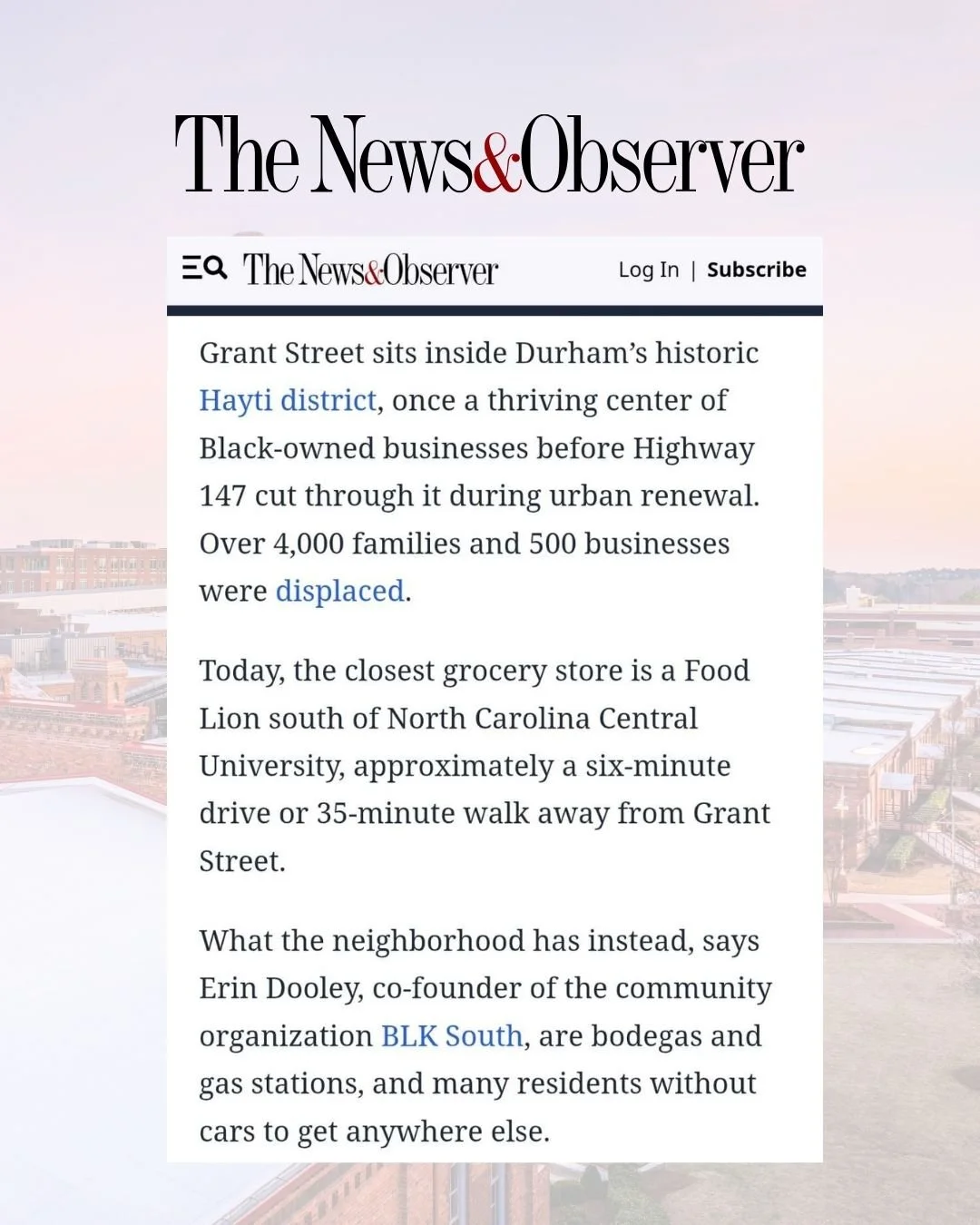
Grant Street sits within Durham’s historic Hayti District, once one of the most prominent centers of Black life, business, and culture in the South. Urban renewal and the construction of Highway 147 displaced thousands of families and hundreds of businesses, fundamentally reshaping the neighborhood.
Today, that history of displacement and disinvestment can still be felt in something as basic as access to food.
The News & Observer highlights the lack of a walkable grocery store serving Grant Street and surrounding parts of Hayti, particularly impacting residents without reliable transportation.
“We don’t really need research to prove what we already know,” BLK South co-founder and Grant Street organizer Erin Dooley told The News & Observer.
The neighborhood lives this reality every day.
Turning Research Into Advocacy
That is also why Grant Street Community and BLK South have approached the Edible Atlas research with both caution and possibility.
Historically Black and low-income communities have too often been places where institutions conduct research, collect information, and leave without producing meaningful benefits for the people who made that research possible.
Grant Street Community believes another relationship is possible.
Rather than asking research to tell residents what is happening in their own neighborhood, the hope is that research can provide another tool to strengthen what residents are already saying — particularly when advocating before institutions and decision-makers with the resources to invest.
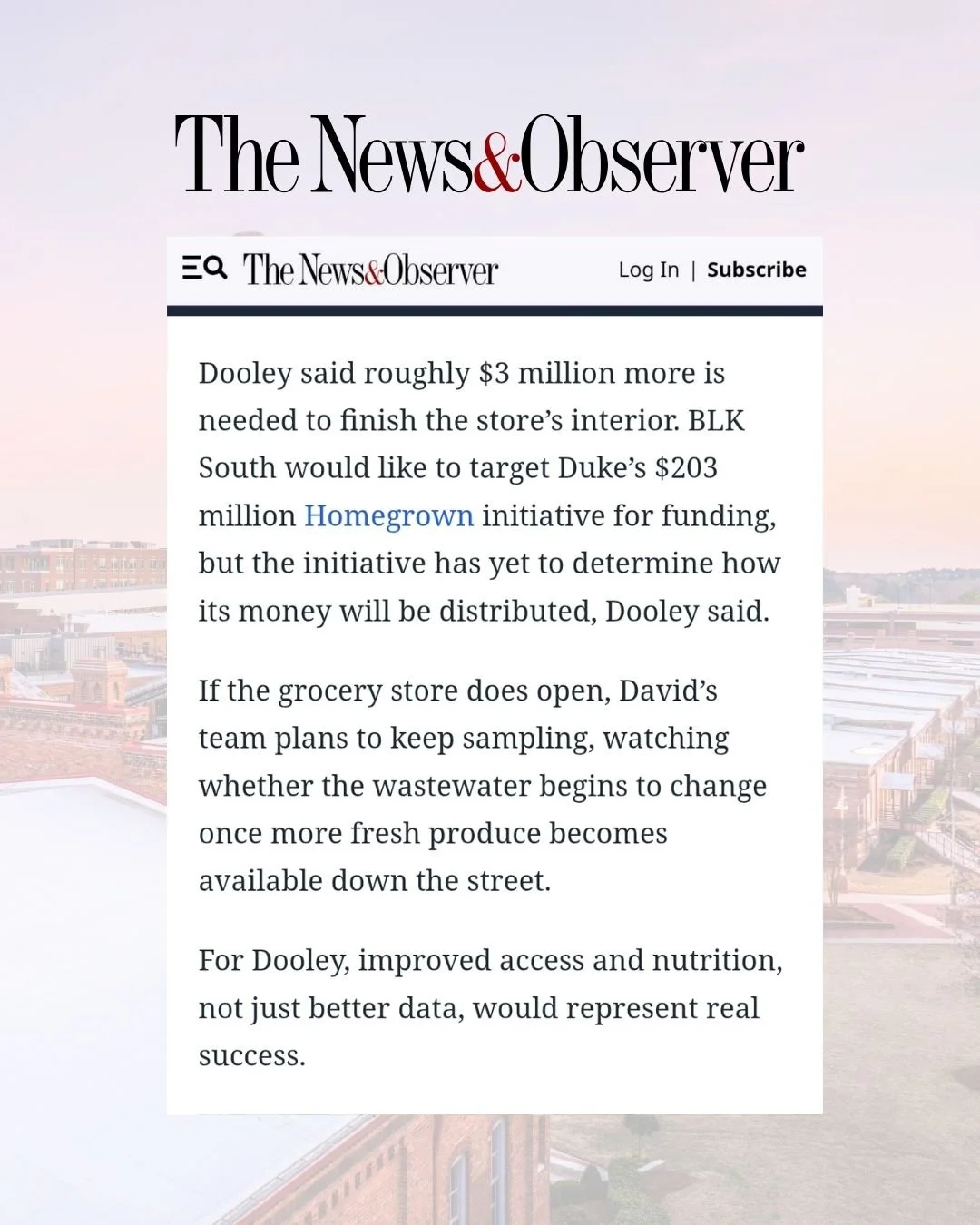
The immediate focus is the planned grocery store in historic Hayti, which is being developed in partnership with Oasis Fresh Market, a Black-owned grocery company. Approximately $3 million is still needed to complete the interior of the store.
The neighborhood hopes the growing body of research around food access can help strengthen the case for that investment.
Growing Attention to Grant Street's Advocacy
The News & Observer story represents the second major news feature highlighting Grant Street Community’s advocacy around the grocery store and food access in Hayti.
For the neighborhood, that growing attention is encouraging — but media coverage itself is not the goal.
The goal is for greater visibility to lead to greater investment in the people and places that have called Hayti home for generations.
It is for research to strengthen community advocacy rather than replace community knowledge.
And ultimately, it is to see a neighborhood where residents can walk to fresh food, locally owned businesses can thrive, and longtime residents can experience the benefits of investment in their own community.
As Erin shared at the conclusion of The News & Observer feature:
“How are we disrupting systems that are created for harm to create ways where we can flourish as a neighborhood for the long haul?”
That question extends far beyond a grocery store. It reflects the larger work Grant Street Community is pursuing: protecting the neighborhood's history while organizing for a future in which the people who have sustained this community can remain here, shape what comes next, and flourish.
Read the full feature:In a Durham food desert, wastewater becomes a tool for advocacy by Luke Bowles in The News & Observer.